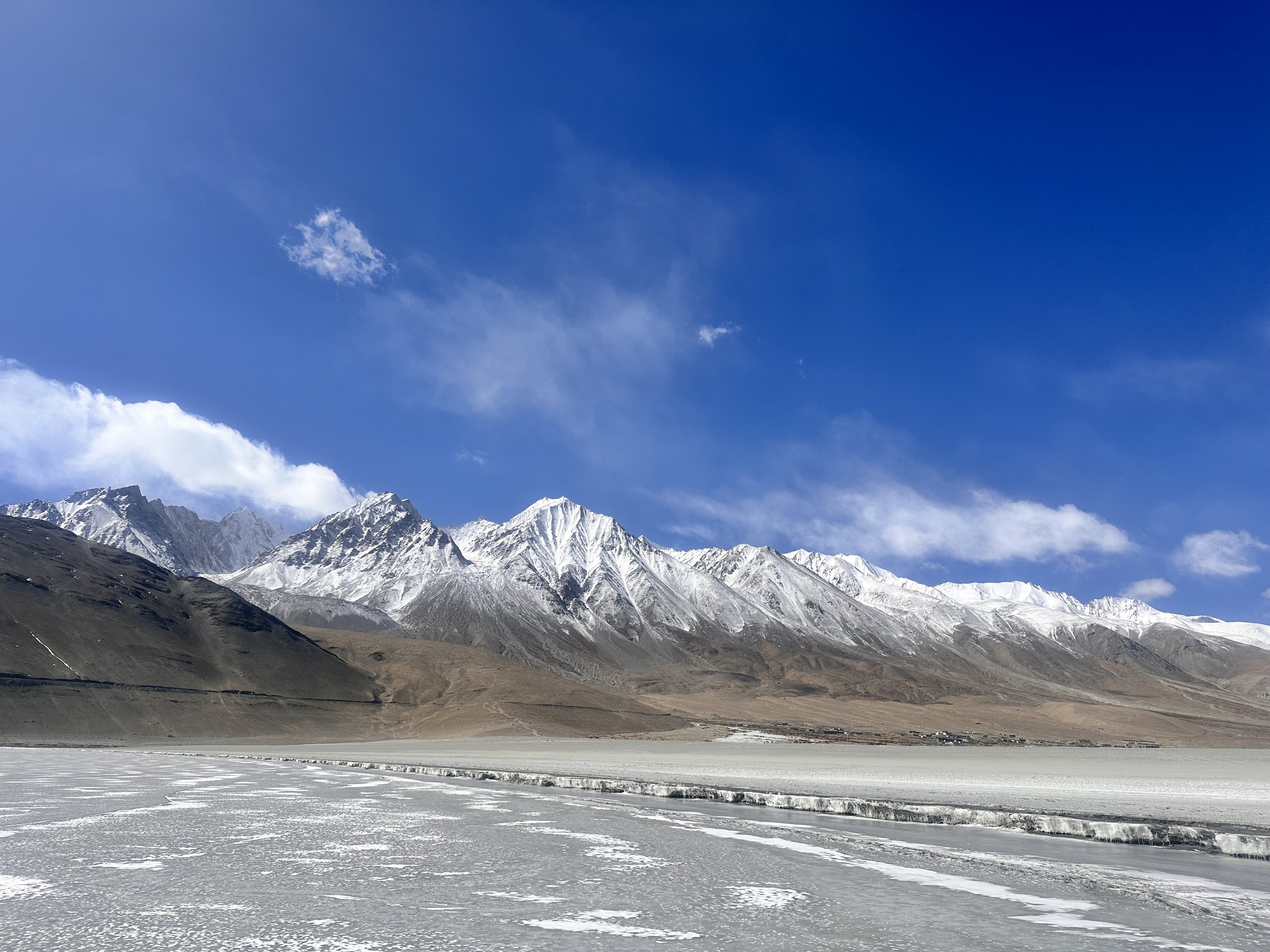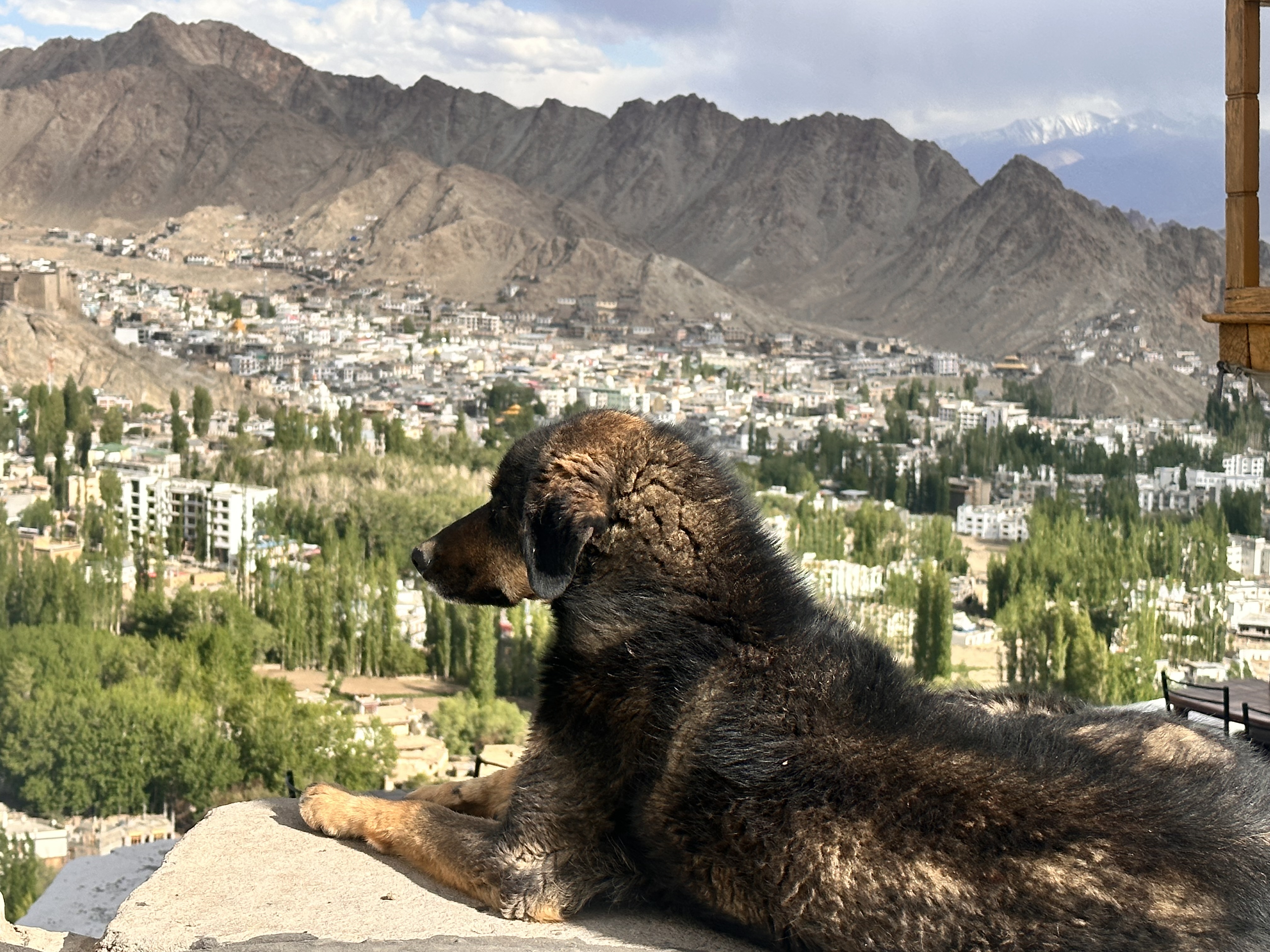
Ladakh entered my life at a juncture when life itself had learned to define itself by monotony. The charm of this land lay in its incredible contrast, with whatever semblance of existence, the rest of us lead in other parts of the country. Where our busy lives held the claustrophobic presence of crowds, hustle, urgency and the woes of daily life, that made each day a high stakes gamble between the crests of jubilance and the troughs of absolute despair, Ladakh on the other hand was characterised by just one word: absence. The absence of swarming crowds, bustling city life and the pressing urgency of life’s next destination. And the space created by pushing out daily life’s demands left me with the valuable gift of the void, where dwarfed by the mighty mountains and embraced by the warm presence of silence, I could reintroduce myself to my soul, stripped of all external distractions.
My time in Ladakh started with the habitual acclimatisation in Leh where I received the opportunity to see the tourist magnets like the Shey Palace with its diminutive doors and layered architecture and the Leh market whose icy air was complemented with the fragrance of steamy chicken momos, delectable Thukpa and other mouthwatering Tibetan delicacies.

A core memory was me shivering in the audience during the Shey Doo Lhoo festival (I had been audacious enough to venture out without thermal wear on, lured by the deceptive bright and sunny Leh mornings only to find frosty icicles settling on my red nose, as we were surprised with sudden snowfall) while watching the Buddhist mask dance whilst sipping on some salty butter tea, a go to beverage of the Ladakhis. The monks in their vibrant costumes and papier mache masks embodied divine spirits and demons come alive. Their blazing colours streaked through the usual grey and white landscape, making the once a year event memorable to the onlookers. I was seated next to a sweet wizened old lady, her rosy apple cheeks and crinkled eyes lighting up in joy at the sight of a white butterfly. Seeing her childlike laughter as she pointed it to me, I stood awestruck at how old age and life’s challenges had not dampened her ability to feel pure unadulterated joy at something as simple as a butterfly.
Later on, further reading up on the subject, I discovered that in Buddhism the white butterfly signified a soul transcending all material attachments to attain Nibbana, which made the sighting all the more special during the mask dance.

Ladakh’s majesty can arguably be best experienced on a road trip, feeling the wind soaring in one’s hair, watching the gigantic mountains whiz past as the serpentine roads wind their way to greater heights. In Ladakh, the journey is just as, if not more, important than the destination. The land of high passes and sapphire blue lakes makes itself known in the colourful flags, sending whispered prayers of Om Mani Padme Hum into the ether, as far as the winds could carry them. The people of Ladakh bear an amiable demeanour that hardly betrays their hardy composition, as they live in harmony amidst the unforgiving cold desert where both water and air are often lacking. I also paid a visit to the Aryan Village in Darchik. Tucked away from direct sight and shielded by the mountains, the village was a hidden treasure trove of apricot blossoms and floral Tepi wearing cheerful Brokpa villagers. A pleasant surprise included coming by a primary school ringing with childish voices singing their A, B, Cs in unison, a heartwarming reminder of the future blossoming amidst the cherished relics of the past.


Buddhism has left its mark on every corner of Ladakh, its Vajrayana form alive and thriving in the magnificent Gompas and preserved carefully by the monks. Be it the smile of the Maitreya Buddha of Thiksey or the trance inducing meditative chants of the monks at Hemis, entering a Gompa in Ladakh brings one face to face with the vast expanse of silence and serenity where no pretences survive and all social masks fall away leaving behind just the sound of one’s beating heart and soft breaths, in harmony with the surrounding nature. As one circumambulates a stupa or turns a giant prayer wheel, one is left contemplating about the repeating patterns and themes of one’s life that make us feel stagnant and the desires that we hold onto, that cause us to remain ensnared in the loop of pain and suffering.

One cannot afford to leave Ladakh, without exalting the otherworldly beauty of its ethereal lakes. The well known Pangong Tso attracts several visitors to view its glimmering expanse, a different shade of blue and green changing hues with the sunlight and time of the year. The shooting of several Bollywood movies on its banks has only increased footfall to this majestic lake bordering India and China, which served as a battleground during the Indo-China war of 1962. Its serene surface and sea reminiscent waves do not betray the fragile geopolitical volcano it rests on nor the ecological challenges that threaten its annual freeze and thaw cycle. Yet another beauty is the Tso Mo Riri Lake that stands apart with its mirror like surface, while its banks are home to furry adorable marmots and groups of carefree Tibetan wild asses and, if one is lucky, even a possible fortunate sighting of the ‘ghost of the mountains’, the regal and resplendent snow leopard.

Something about the very impossibility of the survival of life in its freezing heights makes humanity strive to breach the limits of endurance on its stage. The pristine white of this land has often turned crimson drenched in the sacrifice of several brave hearts, be it in the freezing heights of Kargil or the barren desert of Rezang La. The very air of this land echoes with the spirit of patriotism and feats of unimaginable courage. The physical limit stretching aura of the land is also exemplified by the numerous biking tours and marathons like the Khardung La challenge or the Pangong Tso frozen lake marathon, which is unique in being the world’s highest frozen lake marathon. The sheer thrill of adrenaline that courses through one’s veins at not just surviving but triumphing over one’s physical limits gives Ladakh an edge of intoxicating danger and is also what makes it stand apart in a traveller’s memory. As the picturesque flight from Leh to Delhi takes off, one is left gaping in wonder at the milky snow peaks, the winding glaciers, the sheer improbability of finding home in a place as remote and extreme as Ladakh, and a lingering question: How soon can I return?

Till you find yourself breathing in the frosty mountain air, frozen feet dipped in the pristine waters of the Tso Mo Riri, may these lines inspired by Lal Ded satiate your wanderlust:
Hukus bukus teli wan cze kus
Moh batuk logum deg
Who are you and who am I
As far apart as the ocean and the sky
Pressed as tightly as the horizon between the two
May my search to find myself, end in the depths of you